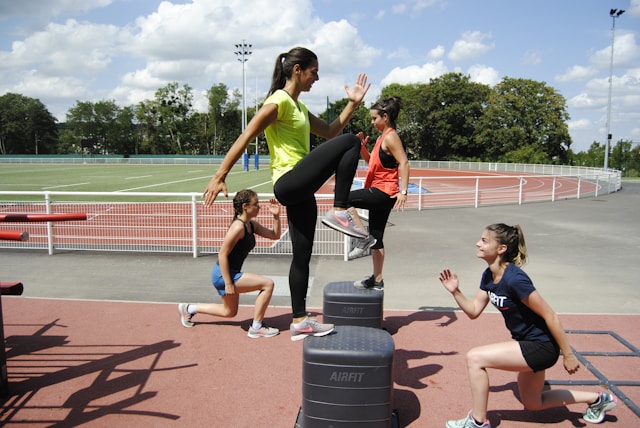
The value of sport for women and girls extends far beyond the professional arena. Participation in sports at a young age is a powerful enabler, teaching girls confidence, resilience, teamwork, and leadership skills that translate into lifelong success across all areas of life. This connection between athletic participation and professional achievement is well-documented and increasingly recognized by corporate leaders and policymakers alike. A recent survey found that 80% of female Fortune 500 CEOs played sports in their formative years, a statistic that underscores the developmental value of athletic competition.
Leadership Skills Forged on the Playing Field
The skills learned on the playing field—discipline, strategic thinking, handling pressure, and working collaboratively toward shared goals—are directly transferable to the boardroom and executive suite. A 2023 Deloitte report further reinforced this connection, revealing that 85% of women who played sports as children believed the skills they developed were crucial to their professional success. Among women in leadership roles, that figure rose to 91%. Despite these clear benefits, a significant participation gap exists that threatens to undermine progress. By the age of 14, girls drop out of sports at twice the rate of boys, creating a pipeline problem that affects everything from high school teams to professional leagues. This dropout crisis is driven by a complex interplay of factors including social expectations, peer pressure, a lack of investment in quality programs, and a shortage of visible role models who reflect their experiences and aspirations.
Women Leaders Who Played Sports
| Leader | Position | Sport Played |
|---|---|---|
| Mary Barra | CEO, General Motors | Basketball |
| Ginni Rometty | Former CEO, IBM | Tennis, swimming |
| Indra Nooyi | Former CEO, PepsiCo | Cricket, basketball |
| Ursula Burns | Former CEO, Xerox | Softball |
| Sheryl Sandberg | Former COO, Meta | Tennis, swimming |
| Christine Lagarde | President, European Central Bank | Synchronized swimming |
The Coaching Gap and Safety Concerns
The gender gap in coaching and leadership represents another significant barrier. FIFA estimates that women make up only around 5% of registered football coaches worldwide, a figure that mirrors similar shortages across most sports. When girls do not see themselves represented in leadership positions, it can implicitly signal a lack of belonging or future opportunity. This absence of female role models in coaching and administrative roles perpetuates a cycle where women are underrepresented at every level of the sports ecosystem. Furthermore, the threat of violence and harassment is a pervasive barrier that drives girls and women away from sports. Research indicates that 21% of professional women athletes have experienced sexual abuse as a child in sport, nearly double the rate for male athletes. Safeguards are often underfunded and ineffective, and sports organizations have historically been accused of covering up abuse to protect their reputations. Addressing these safety issues is not just a moral imperative; it is essential for building a sustainable and inclusive ecosystem that allows girls and women to fully benefit from sport.
Female Representation in Coaching by Sport
| Sport | Female Coaches (%) | Gap vs Male Coaches |
|---|---|---|
| Football (FIFA) | 5% | 95% male dominated |
| Basketball (WNBA) | 35% | 65% male |
| Tennis (WTA) | 40% | 60% male |
| Cricket (ICC) | 8% | 92% male dominated |
| Rugby (World Rugby) | 10% | 90% male dominated |
| Gymnastics (FIG) | 45% | 55% male |